What's the Difference Between Drivers Ed and Driving Lessons?
Understand the key differences between drivers education and driving lessons. This guide covers definitions, benefits, and more, helping you make informed choices.
On this page
Quick Answer
Drivers education teaches the rules of the road, traffic laws, and safety measures, typically as a structured course, while driving lessons focus on practical behind-the-wheel experience to prepare students for driving.
What is Drivers Education?
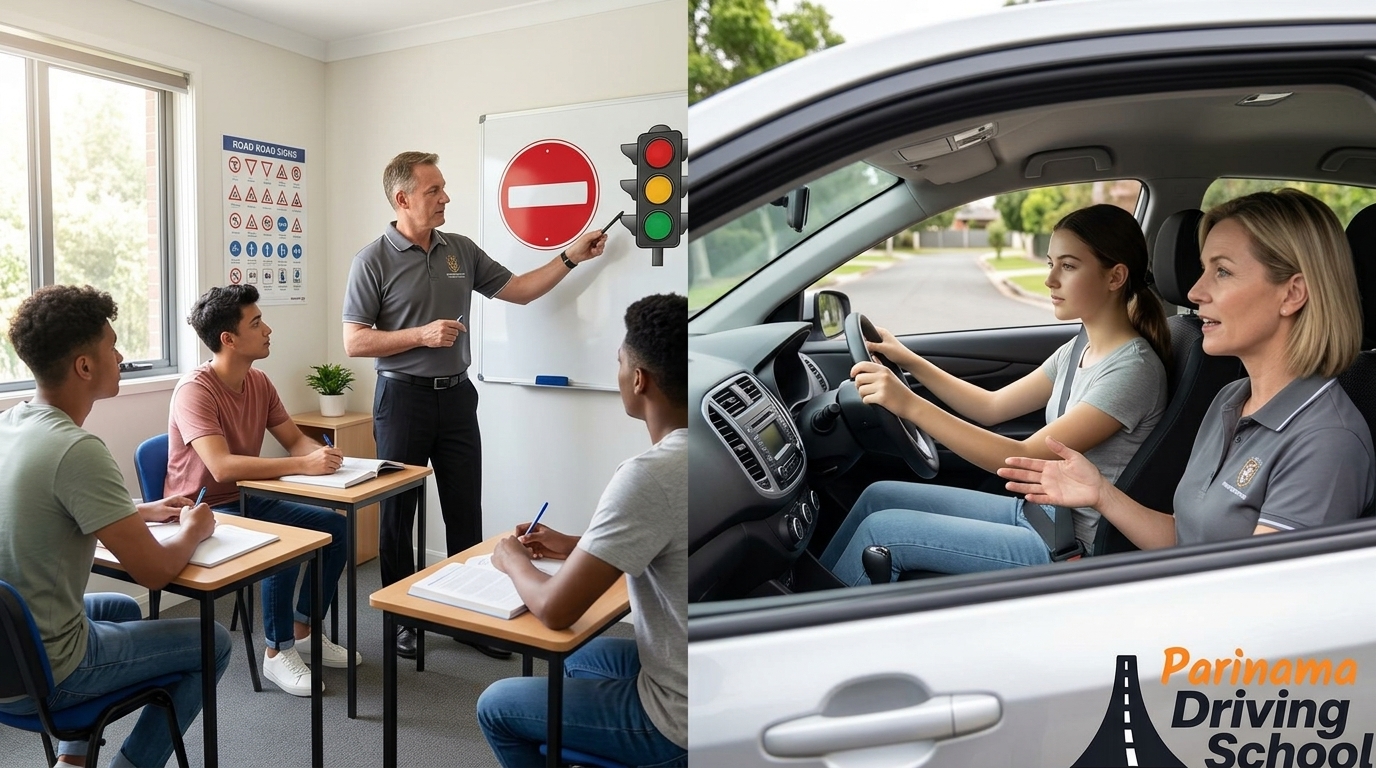
Drivers education (or drivers ed) is an organized curriculum designed to teach new drivers the rules of the road, safe driving practices, and traffic laws. It usually includes both classroom instruction and some behind-the-wheel training. For example, Parinama Driving School offers a state-approved 6-hour adult driver education course that equips learners with crucial theoretical knowledge, essential for obtaining a Texas driver's license. According to the Texas Department of Public Safety, completing a drivers education course is a requirement for many new drivers.
What are Driving Lessons?
Driving lessons are practical sessions where learners receive hands-on experience behind the wheel under the guidance of an instructor. These lessons allow students to apply the knowledge gained during drivers education, focusing on skills like vehicle handling, parking, and navigation. At Parinama Driving School, certified instructors conduct these lessons, ensuring learners feel confident and prepared.
Key Differences Between Drivers Ed and Driving Lessons
Drivers education and driving lessons serve distinct purposes, and understanding these differences can help new drivers select the best option for their needs.
| Aspect | Drivers Ed | Driving Lessons |
|---|---|---|
| Content Focus | Covers traffic laws, road signs, and safety measures. | Concentrate on real-world driving skills and techniques. |
| Format | A classroom setting supplemented by some driving practice. | One-on-one sessions that are entirely focused on driving experience. |
| Objective | Aims to prepare students for the written test and provide foundational knowledge. | Designed to prepare students for the driving test and enhance practical driving skills. |
| Duration | Typically around 6 hours, depending on state regulations. | Varies widely based on learner needs; lessons can be one hour or more. |
When to Enroll in Each
Both drivers education and driving lessons are essential for new drivers, but they cater to different stages of learning. It’s generally advisable to start with drivers education to understand the theoretical aspects, followed by driving lessons for practical application.
Benefits of Each Program
Benefits of Drivers Education
- Structured Learning: Provides a comprehensive overview of driving laws and safety.
- Preparation for Tests: Helps students prepare for the written test required by most states for obtaining a driver's license.
- Certificate Issuance: Often results in a completion certificate that may lower insurance rates.
Benefits of Driving Lessons
- Practical Experience: Offers hands-on experience in real driving situations.
- Feedback and Improvement: Instructors provide immediate feedback, helping learners correct mistakes.
- Test Readiness: Enhances preparedness for the practical driving test.
Comparison Table
| Feature | Drivers Ed | Driving Lessons |
|---|---|---|
| Ideal for | Beginners needing theory | Learners looking for practice |
| Completion Time | 6 hours minimum | Flexible based on personal progress |
| Cost | Varies; often less than driving lessons | Typically higher per hour than drivers ed |
Checklist for New Drivers
- Complete a drivers education course if required.
- Schedule driving lessons with a certified instructor.
- Practice driving with a licensed adult.
- Prepare for both the written and driving tests.
- Obtain necessary documentation (like proof of education completion).
Summary
Understanding the differences between drivers education and driving lessons is vital for new drivers. Drivers education focuses on theory, while driving lessons provide practical experience. Both play essential roles in preparing for a driver's license. It’s best to engage in both to ensure a well-rounded driving education.
Call to Action
Ready to start your driving journey? Enroll in our drivers education and driving lessons at Parinama Driving School today and secure your path to becoming a confident driver!
Frequently asked questions
- Is drivers ed mandatory before taking driving lessons?
- While not all states require drivers education, many do, especially for teenagers. Check your state’s specific requirements to confirm.
- How many driving lessons do I need?
- The number of driving lessons varies based on individual aptitude. Most people benefit from 5 to 10 lessons to prepare adequately for the driving test.
- Can I take driving lessons without completing drivers ed?
- Yes, but completing drivers education is highly recommended to ensure a solid foundation in traffic laws and safety measures.
Written by
Parinama Driving School Team
Parinama Driving School is a Texas DPS–authorized driving school in Austin & San Antonio, helping adults, teens, and new residents get licensed with behind-the-wheel lessons and third-party road tests, 7 days a week.
Book a lesson with our instructorsRelated Texas driving guides

VOE for San Antonio-Area High Schools: Links and Phone Numbers
VOE request pages and phone numbers for Pieper, East Central, Alamo Heights, Central Catholic, Communications Arts, Southside and Premier high schools.

VOE for Liberty Hill High Schools: Links and Contacts
How to request a Verification of Enrollment at Liberty Hill High School and Legacy Ranch High School.
VOE for Round Rock High Schools: Links and Phone Numbers
Where to request a Verification of Enrollment at Round Rock, McNeil, Cedar Ridge, Stony Point and Westwood high schools.