How to Position Your Car in a Turn Lane Safely
Learn how to properly position your car in a turn lane to ensure safe and efficient turns. This guide covers techniques, common mistakes, and best practices.
On this page
Quick Answer
Position your car in a turn lane by signaling your intention, checking mirrors, and aligning your vehicle properly with the lane markings before making your turn.
Understanding Turn Lanes
Turn lanes are designated areas on the road where vehicles can prepare to make a turn. They help manage traffic flow and enhance safety by separating turning vehicles from those going straight. Knowing when and how to utilize turn lanes is crucial for all drivers.
Steps to Correctly Position Your Car
To ensure you position your car properly in a turn lane, follow these steps:
- Identify the Turn Lane: Look for signage indicating a turn lane and its appropriate use (e.g., left or right turn).
- Signal Your Intent: Use your turn signal at least 100 feet before entering the turn lane. This alerts other drivers of your actions.
- Check Mirrors and Blind Spots: Before moving into the turn lane, check your side mirrors, rearview mirror, and blind spots for any approaching vehicles or cyclists.
- Slow Down: Gradually reduce your speed as you approach the turn lane, ensuring a smooth transition.
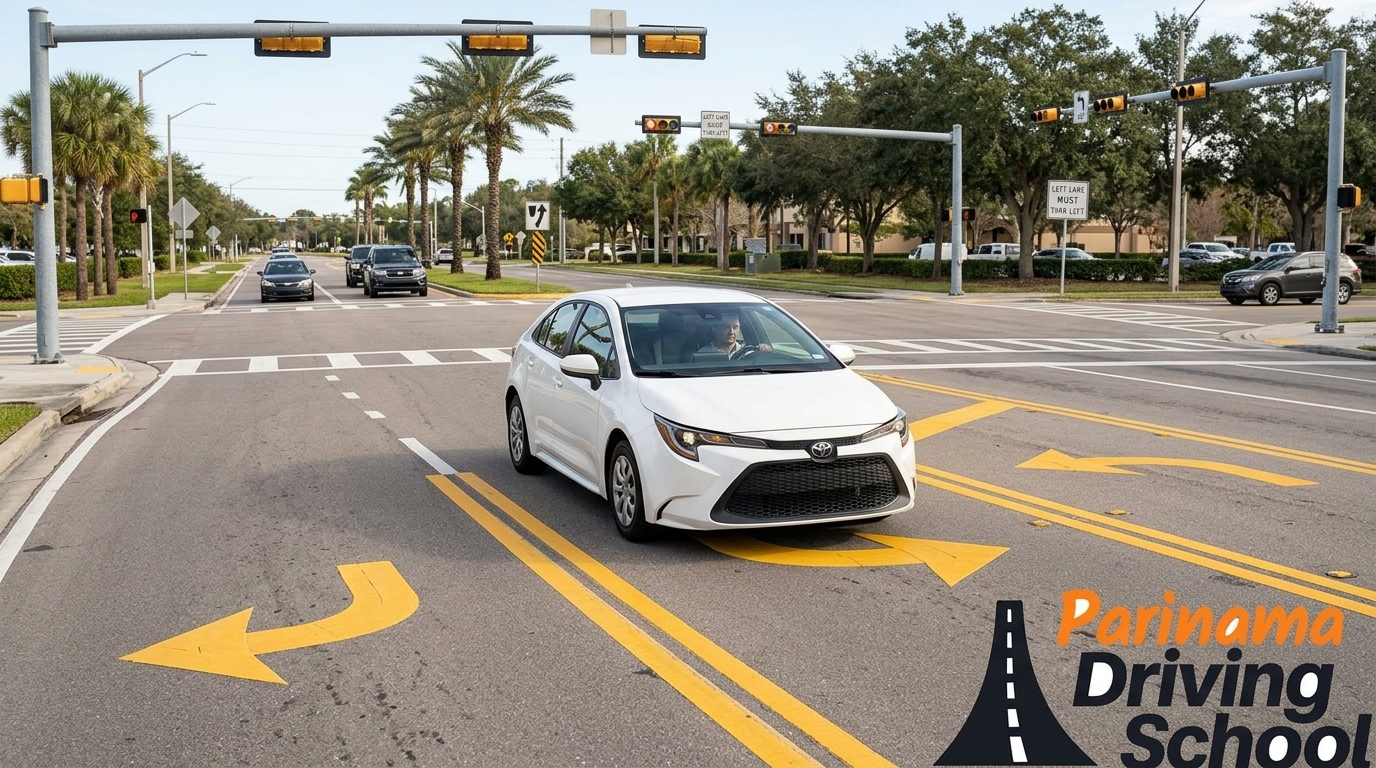
- Align Your Vehicle: Position your car within the boundaries of the turn lane, ensuring both the front and rear align with the lane markings.
- Maintain a Safe Distance: Keep a safe distance from vehicles around you while waiting to turn, and ensure you have a clear view of oncoming traffic or pedestrians.
- Execute the Turn: Once it’s safe, proceed to make your turn smoothly, checking for obstacles in all directions.
Table: Turn Lane Positioning Tips
| Step | Action | Importance |
|---|---|---|
| Identify the Lane | Look for signs and road markings | Ensures you are in the correct lane |
| Signal | Use turn signals to communicate your intention | Enhances safety for all road users |
| Check Blind Spots | Look over your shoulders and check mirrors | Avoids collisions with hidden vehicles |
| Slow Down | Gradually reduce speed as you approach | Prevents abrupt movements |
| Align Your Vehicle | Position your car within lane boundaries | Maintains stability during the turn |
| Observe Traffic | Watch for oncoming vehicles or pedestrians | Ensures a safe turn |
Common Mistakes to Avoid
- Not Signaling: Failing to signal can cause confusion for other drivers.
- Improper Positioning: Driving too far into the intersection or not aligning properly can create hazards.
- Speeding in the Turn Lane: Entering a turn lane too quickly can lead to losing control of the vehicle.
- Ignoring Surroundings: Forgetting to check mirrors or blind spots can result in accidents.
Real-life Examples of Turn Lane Positions
- Left Turn: In a dedicated left turn lane, your car should be positioned to the far left, aligned with lane markings, while ensuring oncoming traffic is clear.
- Right Turn: In a right turn lane, place your vehicle close to the curb, ensuring you yield to pedestrians.
Checklist for Safe Turn Lane Positioning
- Identify the turn lane well in advance.
- Activate turn signals appropriately.
- Check mirrors and blind spots before moving.
- Reduce speed entering the turn lane.
- Position your vehicle correctly based on the lane markings.
- Maintain awareness of traffic signals and pedestrians.
- Execute the turn only when safe.
Summary
Properly positioning your car in a turn lane is essential for safe driving. By following the outlined steps and avoiding common mistakes, you can navigate turn lanes confidently and responsibly.
Call to Action
Ready to enhance your driving skills? Enroll in Parinama Driving School today for personalized lessons and expert guidance. Visit our website or call us at (512) 255-1660 to get started!
Frequently asked questions
- When should I signal while approaching a turn lane?
- Signal your intention at least 100 feet before entering the turn lane to notify other drivers.
- What if the turn lane is blocked?
- If the lane is blocked, wait patiently behind the line until it is safe to proceed, ensuring you're not obstructing traffic.
- Can I change lanes in a turn lane?
- No, changing lanes in a turn lane can be hazardous and is typically illegal.
Written by
Parinama Driving School Team
Parinama Driving School is a Texas DPS–authorized driving school in Austin & San Antonio, helping adults, teens, and new residents get licensed with behind-the-wheel lessons and third-party road tests, 7 days a week.
Book a lesson with our instructorsRelated Texas driving guides
VOE for San Antonio-Area High Schools: Links and Phone Numbers
VOE request pages and phone numbers for Pieper, East Central, Alamo Heights, Central Catholic, Communications Arts, Southside and Premier high schools.

VOE for Liberty Hill High Schools: Links and Contacts
How to request a Verification of Enrollment at Liberty Hill High School and Legacy Ranch High School.
VOE for Round Rock High Schools: Links and Phone Numbers
Where to request a Verification of Enrollment at Round Rock, McNeil, Cedar Ridge, Stony Point and Westwood high schools.