How to Make a Proper Right Turn: A Complete Guide
Learning how to make a proper right turn is essential for safe driving. This guide covers the step-by-step process and tips for mastering a right turn, whether you're a beginner or refreshing your skills.
On this page
Quick Answer
To make a proper right turn, assess the traffic situation, use your turn signal, slow down, come to a complete stop when necessary, check for pedestrians and cyclists, and steer smoothly into the right lane after the turn.
Understanding Right Turns
A proper right turn involves several considerations to ensure safety for you, pedestrians, and other vehicles. Familiarizing yourself with surroundings, local traffic rules, and the position of your vehicle on the road is key to performing this maneuver effectively.
Step-by-Step Process
Preparation
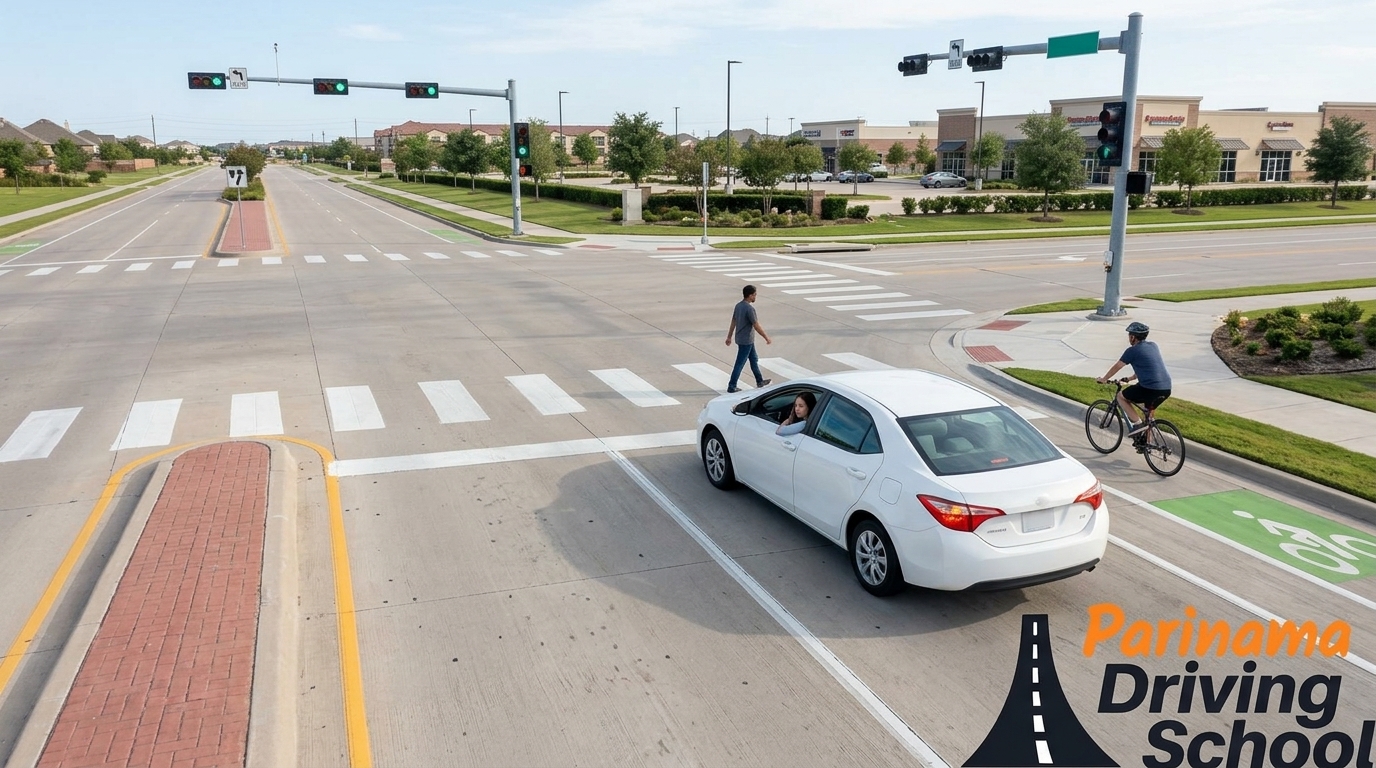
- Check Your Surroundings: Before making a right turn, glance at your mirrors to ensure no vehicles, bicycles, or pedestrians are nearby. Always prepare to yield to pedestrians at crosswalks.
- Use Your Turn Signal: At least 100 feet before your turn, activate your right turn signal to alert other drivers.
- Position Your Vehicle: If there's a bike lane, check for bicyclists before moving right. Position your vehicle close to the right curb or edge of the road, ensuring you're not blocking other lanes.
Executing the Turn
- Approach Slowly: Reduce your speed as you come close to the intersection, scanning for any signs, signals, or road markings.
- Yield to Pedestrians: Always check for pedestrians crossing and yield the right-of-way if needed.
- Turn without Crossing the Line: When turning, make sure your vehicle's path does not cross into adjacent lanes. Curve into the new lane without cutting corners.
- Complete the Turn: Steering smoothly, ensure your vehicle is in the correct lane for your intended direction once the turn is finished.
Post-Turn Considerations
- Reactivate Your Left Signal: After turning, check your rearview mirror and signal if you're planning to change lanes.
- Adjust to Traffic: Maintain a safe speed and be aware of the traffic around you to rejoin the flow smoothly.
Common Mistakes
- Failing to Signal: Not using turn signals or using them too late can confuse other drivers and lead to unsafe situations.
- Rushing the Turn: Taking a turn too quickly can result in losing control of the vehicle and increase the risk of an accident.
- Ignoring Pedestrians and Cyclists: Always prioritize pedestrian safety, as failing to yield can have severe consequences.
Right Turn Rules and Regulations
- Follow Traffic Signals: Always obey traffic lights and signs. A red light can permit a right turn in some locations, but checking local laws is crucial.
- Yielding to Bicyclists: Always yield to cyclists in a bike lane when making a right turn, as their path may intersect yours.
Practice Makes Perfect
Revisiting driving lessons can enhance your skills and prepare you for real-world encounters. Consider joining classes at Parinama Driving School to gain confidence in your driving abilities. With certified instructors available, you can practice right turns under specialized guidance.
| Lessons Offered | Benefits |
|---|---|
| Adult Driver Education | Comprehensive understanding of the rules and safety |
| Behind-the-Wheel Lessons | Gain hands-on experience |
| DPS-Authorized Road Testing | Efficient preparation for your license |
Checklist for a Proper Right Turn
- Check mirrors for pedestrians and cyclists.
- Activate turn signal 100 feet before the turn.
- Position the vehicle close to the right curb.
- Slow down and prepare to yield at the intersection.
- Look for pedestrians and cyclists.
- Steer smoothly into the new lane.
- Reactivate signals after the turn if changing lanes.
Summary
Mastering a proper right turn is a crucial skill every driver should possess. Understanding the rules, practicing safe habits, and being aware of your surroundings can help ensure safety for all road users. With the right training and knowledge, making right turns can become second nature.
Call to Action
Ready to enhance your driving skills? Join classes at Parinama Driving School for expert instruction tailored to your needs. Contact us today at (512) 255-1660 or visit parinamadrivingschool.com to enroll!
Frequently asked questions
- What should I do if there's a red light at the intersection?
- If there’s a red light, check for signs that allow right turns on red and yield to pedestrians.
- How do I handle a cyclist when making a right turn?
- Always yield to cyclists in a bike lane, checking their path before turning.
- Can I make a right turn from any lane?
- Typically, make a right turn from the rightmost lane unless otherwise marked.
Written by
Parinama Driving School Team
Parinama Driving School is a Texas DPS–authorized driving school in Austin & San Antonio, helping adults, teens, and new residents get licensed with behind-the-wheel lessons and third-party road tests, 7 days a week.
Book a lesson with our instructorsRelated Texas driving guides
VOE for San Antonio-Area High Schools: Links and Phone Numbers
VOE request pages and phone numbers for Pieper, East Central, Alamo Heights, Central Catholic, Communications Arts, Southside and Premier high schools.
VOE for Liberty Hill High Schools: Links and Contacts
How to request a Verification of Enrollment at Liberty Hill High School and Legacy Ranch High School.
VOE for Round Rock High Schools: Links and Phone Numbers
Where to request a Verification of Enrollment at Round Rock, McNeil, Cedar Ridge, Stony Point and Westwood high schools.