How to Check Your Blind Spot: Essential Steps for Safe Driving
Learn how to safely check your blind spot for safer driving. Follow our expert instructions, and understand the importance of this crucial safety habit.
On this page
Quick Answer
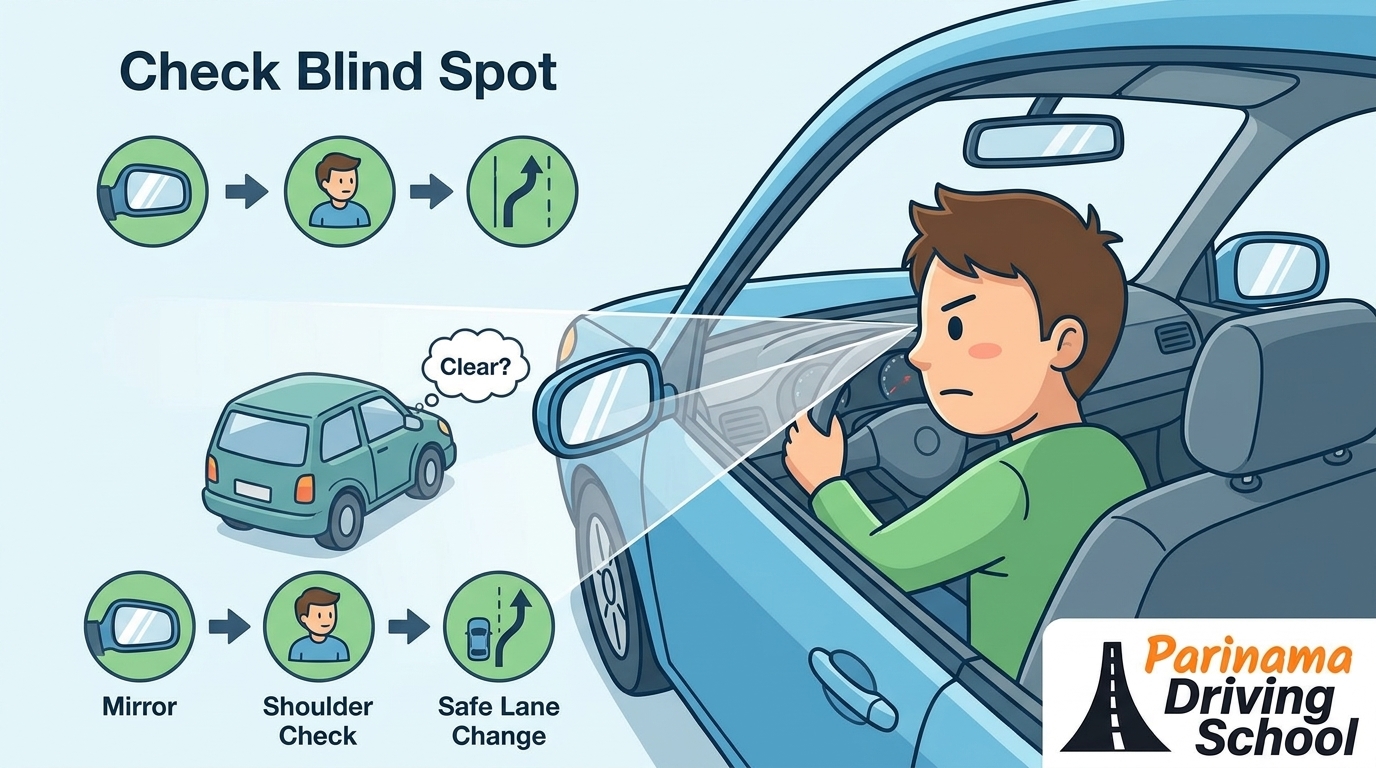
To check your blind spot, physically turn your head to look over your shoulder, ensuring you have a clear view of adjacent lanes before changing lanes or merging.
What is a Blind Spot?
A blind spot is an area around your vehicle that cannot be directly observed using standard mirrors. There are typically blind spots on both the driver's side and passenger's side of the vehicle.
Why Checking Your Blind Spot is Important
Checking your blind spot is crucial for safe driving as it reduces the risk of accidents. According to the National Highway Traffic Safety Administration (NHTSA), approximately 840,000 accident-related injuries are attributed to lane changes and merging maneuvers linked to blind spots each year. These collisions can often be severe due to the speed and size of the vehicles involved. Ensuring that you check your blind spot effectively can prevent these incidents, making you a more responsible driver.
Step-by-Step Instructions to Check Your Blind Spot
- Signal Your Intentions: Always signal your direction before changing lanes. This alerts other drivers of your intentions and gives them time to react.
- Adjust Your Mirrors: Ensure your side mirrors are positioned correctly to minimize blind spots. A proper alignment includes having them slightly angled outward.
- Look Over Your Shoulder: Physically turning your head towards the blind spot offers the best view of approaching vehicles or cyclists. Check both sides before lane changes — remember there are blind spots on both sides of the vehicle.
- Re-check Mirrors: After checking your blind spot, glance at your mirrors again to confirm that it's safe to execute your move.
- Merge Safely: Perform the lane change or merge only when you are confident the space is clear, and remember to turn off your signal.
Using Mirrors to Eliminate Blind Spots
Adjust the side mirrors to reduce blind spots effectively. Many drivers place their mirrors to see the sides of their vehicle, but this setup can leave blind spots. Position side mirrors to show vehicles approaching from behind rather than the sides of your car. This angle helps spot more potential hazards.
Blind Spot Detection Technology
Blind spot detection technology utilizes sensors to alert drivers when an object enters the blind spot area. Most modern vehicles come equipped with this feature. It's essential to understand that while this technology enhances safety, drivers should not rely solely on it. Always combine technology with proper visual checks to ensure maximum safety.
Common Mistakes When Checking Blind Spots
- Overlooking Mirrors: Many drivers skip mirror checks after physically turning their heads, which can lead to dangerous oversights.
- Insufficient Shoulder Check: Failing to turn your head sufficiently or not checking both sides can leave unseen hazards.
- Distraction: Being distracted by passengers, mobile devices, or other in-car activities can prevent drivers from checking their blind spots effectively.
Checklist: How to Safely Check Your Blind Spot
- Signal your intention to change lanes.
- Adjust your side mirrors correctly.
- Turn your head to check both blind spots.
- Quickly glance at your mirrors again.
- Ensure the lane is clear before merging.
- Turn off your signal after merging.
Summary
Checking your blind spot is an essential aspect of safe driving that can significantly reduce the likelihood of accidents. By properly using your mirrors, engaging technology, and following the outlined steps, you can ensure safer lane changes and merges.
Call to Action
Make a commitment today to improve your driving safety by regularly checking your blind spots. Share this article with other drivers to help raise awareness!
Frequently asked questions
- Why are blind spots dangerous?
- Blind spots are dangerous because they can hide vehicles or pedestrians from a driver’s view, increasing the likelihood of collisions when changing lanes or merging.
- How can I minimize blind spots effectively?
- To minimize blind spots, adjust your mirrors for a wider view and, if possible, utilize blind spot detection systems.
- Is it legal to rely solely on technology to check blind spots?
- No, while technology such as blind spot monitoring systems can aid safety, it's important to maintain the habit of visually checking blind spots to comply with safe driving practices.
Written by
Parinama Driving School Team
Parinama Driving School is a Texas DPS–authorized driving school in Austin & San Antonio, helping adults, teens, and new residents get licensed with behind-the-wheel lessons and third-party road tests, 7 days a week.
Book a lesson with our instructorsRelated Texas driving guides
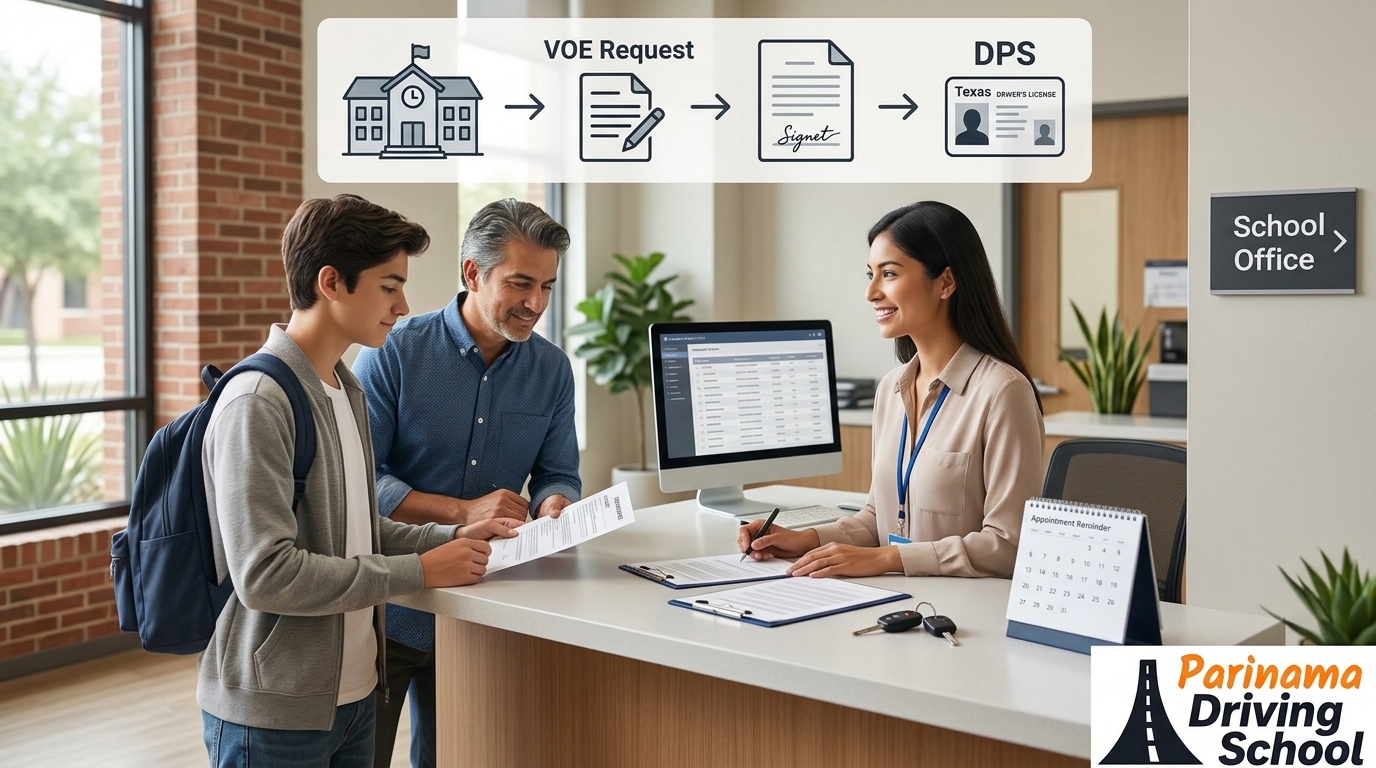
VOE for San Antonio-Area High Schools: Links and Phone Numbers
VOE request pages and phone numbers for Pieper, East Central, Alamo Heights, Central Catholic, Communications Arts, Southside and Premier high schools.
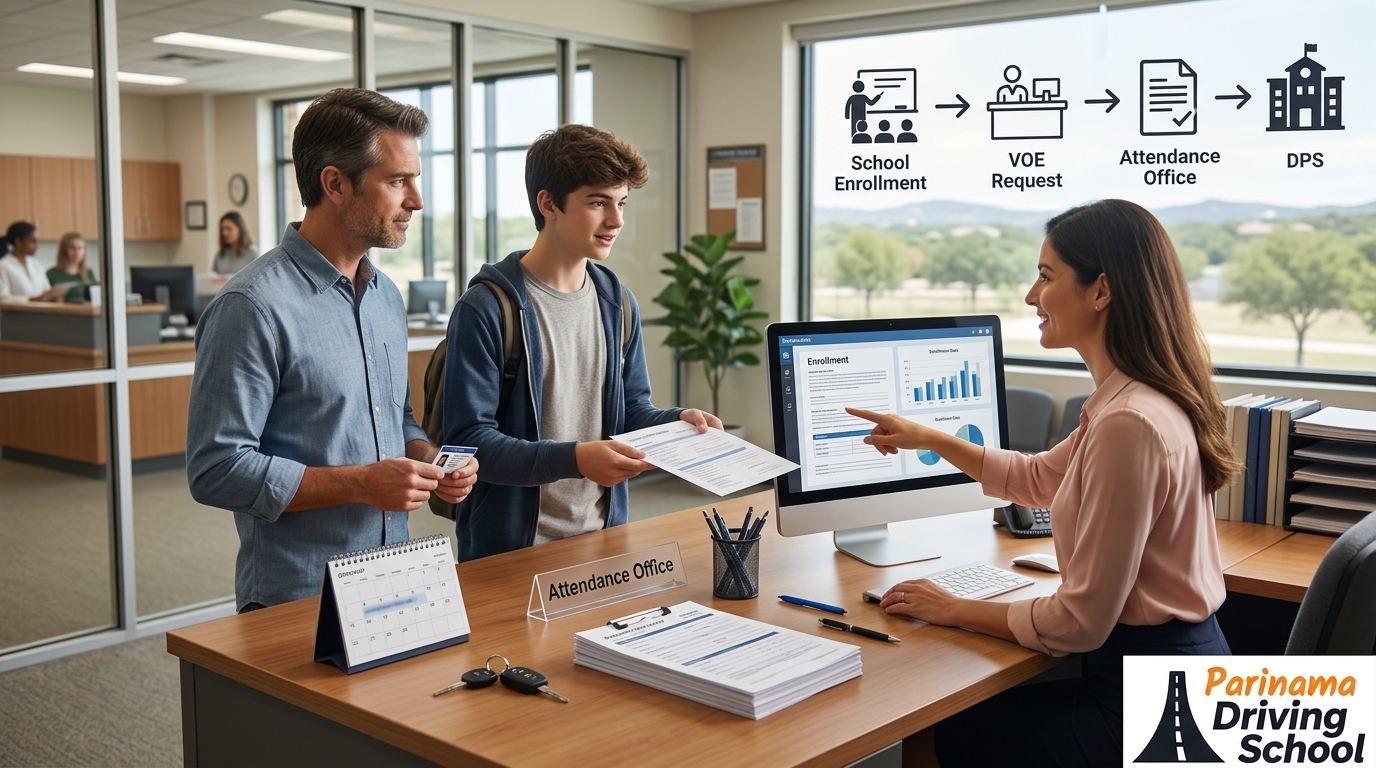
VOE for Liberty Hill High Schools: Links and Contacts
How to request a Verification of Enrollment at Liberty Hill High School and Legacy Ranch High School.
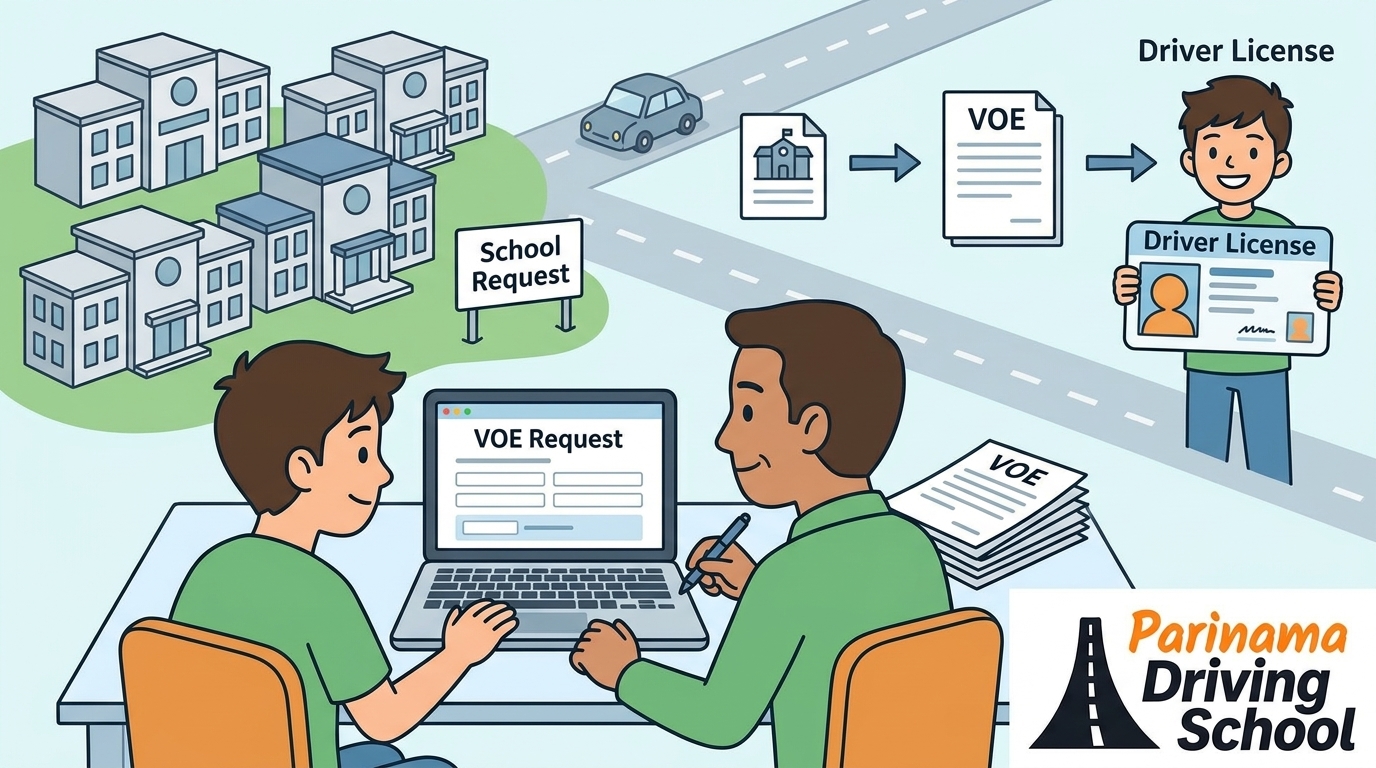
VOE for Round Rock High Schools: Links and Phone Numbers
Where to request a Verification of Enrollment at Round Rock, McNeil, Cedar Ridge, Stony Point and Westwood high schools.