How to Do a U-Turn Safely and Legally: A Complete Guide
Learn how to perform a U-turn safely and legally, including the steps, legal requirements, and common mistakes to avoid. This guide also includes tips and FAQs for confident driving.
On this page
Quick Answer
To perform a U-turn safely and legally, ensure you're in a suitable location, check for traffic, signal your intentions, and execute the turn smoothly while following local traffic laws.
Understanding U-Turns
A U-turn is a driving maneuver that allows a vehicle to turn around and proceed in the opposite direction. When done properly, U-turns can be a practical way to change direction without backtracking. However, they are regulated by traffic laws that vary by jurisdiction. For specific U-turn regulations, consult your local driving authority or visit NHTSA.
Legal Requirements for U-Turns
Before executing a U-turn, familiarize yourself with local regulations. Generally, U-turns are prohibited:
- In residential districts unless marked.
- At intersections where signs are posted prohibiting them.
- When visibility is limited, such as near curves or hills.
- In front of fire stations or near pedestrian crosswalks.
- Where a U-turn would interfere with traffic.
Consult your local Department of Motor Vehicles (DMV) or traffic authority for specific rules pertaining to U-turns in your area. In Texas, the Texas Department of Public Safety (DPS) provides guidelines and state laws regarding U-turns Texas DPS U-Turn Guidelines. For tips from AAA on safe U-turns, please check their detailed safety guides.
Steps to Perform a U-Turn
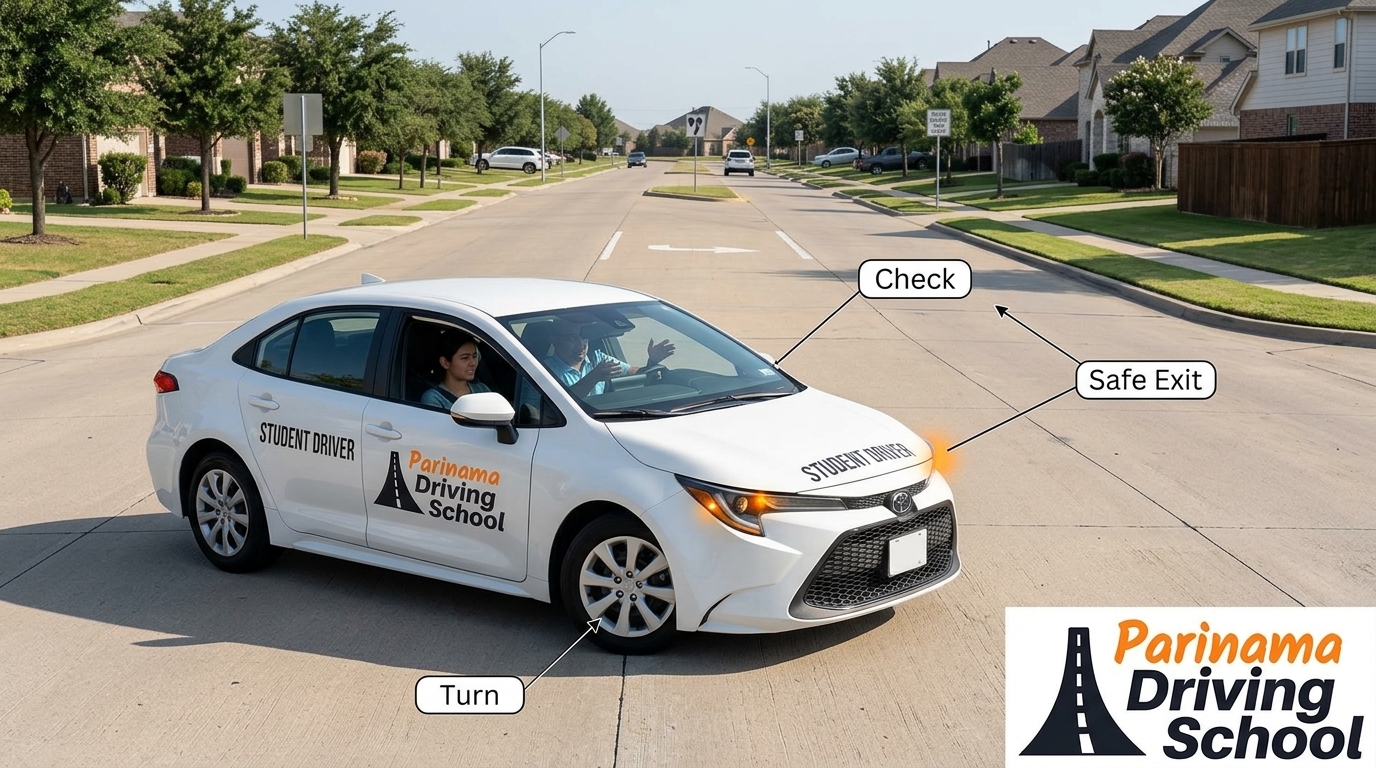
To execute a U-turn correctly and safely, follow these steps:
- Check for signs: Make sure there are no posted restrictions.
- Ensure sufficient space: Look for a wide, open area with enough visibility and distance to safely complete the maneuver.
- Signal your intention: Use your turn signal to alert other drivers.
- Check for traffic: Look in all directions to ensure no oncoming vehicles or pedestrians.
- Begin the turn: Steer into the opposite lane while monitoring your surroundings.
- Complete the turn: Navigate back into your original lane after checking for any vehicles in your new direction.
| Step | Action | Details |
|---|---|---|
| 1 | Check for signs | Look for U-turn prohibitions. |
| 2 | Ensure space | Confirm there's enough room to turn. |
| 3 | Signal | Use your turn signal to indicate your move. |
| 4 | Check traffic | Ensure no oncoming vehicles or pedestrians. |
| 5 | Begin turn | Steer smoothly into the opposite lane. |
| 6 | Complete turn | Safely merge into your new direction. |
Common Mistakes to Avoid
Avoid these common mistakes when performing a U-turn:
- Failing to signal: Always use your turn signal to communicate your intentions.
- Not checking mirrors: Ensure to check for vehicles in your blind spots before turning.
- Turning too sharply: Avoid tight turns that could cause your vehicle to swing into other lanes.
- Ignoring road signs: Always comply with local U-turn regulations to avoid penalties.
Practice Tips for U-Turns
To gain confidence in making U-turns, consider the following practice tips:
- Use a quiet street: Practice U-turns in low-traffic areas to get comfortable with the maneuver.
- Mark your references: Use visual references like trees or mailboxes to gauge your turning radius.
- Practice in different vehicles: Try performing U-turns in various vehicles to understand their handling.
When Not to U-Turn
There are several circumstances when you should avoid making a U-turn:
- Heavy traffic: Avoid U-turns in congested areas where it may disrupt flow.
- Inclement weather: Poor visibility or slick roads can make U-turns hazardous.
- Near intersections: When there's a high volume of pedestrians or vehicles.
Checklist: U-Turn Safety and Legality
- Verify no restrictions on U-turns at your location.
- Ensure a clear view of surrounding traffic.
- Signal your turn well in advance.
- Maintain speed and control throughout the maneuver.
- Watch for pedestrians and cyclists.
Summary
Performing a U-turn safely and legally involves understanding local traffic laws, identifying safe locations, and following clear procedures during execution. Practicing in low-risk settings and being aware of your surroundings will enhance your driving skills.
Call to Action
Ready to improve your driving skills? Join our driving school for expert instruction on U-turns and other essential maneuvers! Visit Parinama Driving School to learn more.
Frequently asked questions
- What are the common U-turn regulations?
- Common regulations include prohibitions in residential areas, at certain intersections, and where visibility is poor. Always look for signage.
- Can you perform a U-turn at a traffic light?
- In many jurisdictions, performing a U-turn at a traffic light is permissible if not prohibited by signs; however, always check local laws.
- What should you do if a U-turn is illegal in an area?
- If a U-turn is illegal, look for alternate routes or intersections where making a turn is permitted.
Written by
Parinama Driving School Team
Parinama Driving School is a Texas DPS–authorized driving school in Austin & San Antonio, helping adults, teens, and new residents get licensed with behind-the-wheel lessons and third-party road tests, 7 days a week.
Book a lesson with our instructorsRelated Texas driving guides
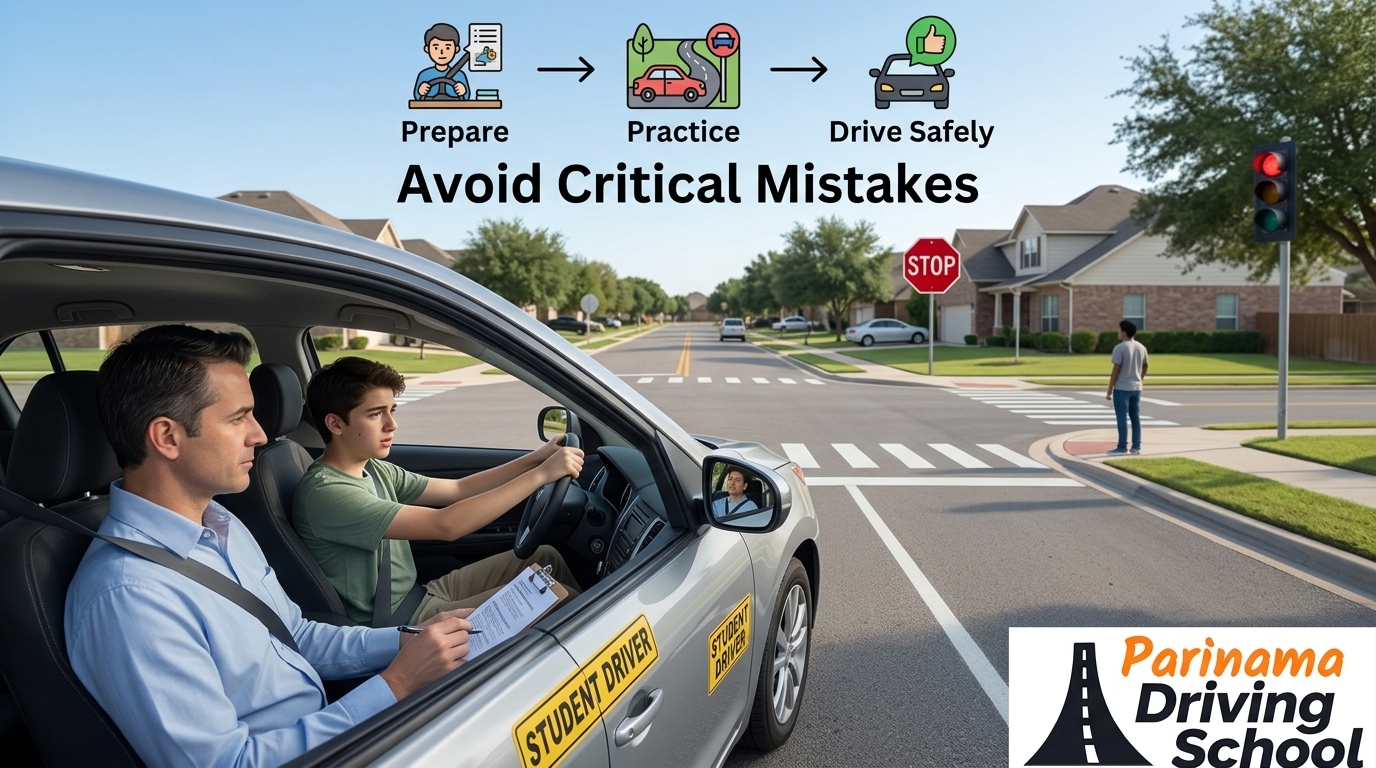
Automatic Fail on the Texas Driving Test: Key Factors and Preparation
Learn what constitutes an automatic fail on the Texas driving test, common reasons for failing, and how to prepare effectively to ensure success.
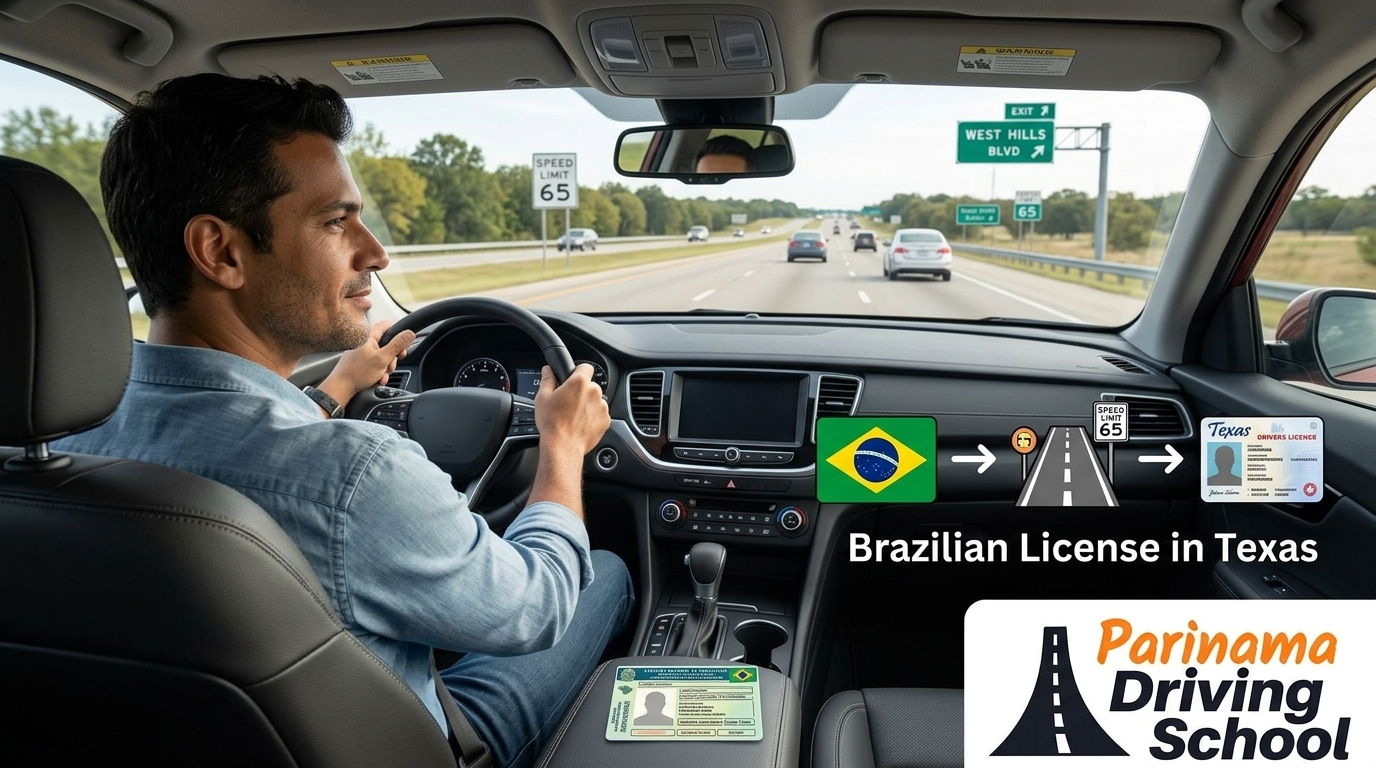
Driving in Texas with a Brazilian License: Your Essential Guide
Learn if you can drive in Texas with a Brazilian license, the required steps for conversion, and challenges you may face. Get informed now!
Can I Drive in Texas with a License from Colombia?
Driving in Texas with a Colombian license is permitted for 90 days. However, for longer stays, you'll need to convert your license as per Texas regulations.