How to Do a Three Point Turn: A Step-by-Step Guide for Drivers
Master the three point turn with our comprehensive guide. Get step-by-step instructions, safety tips, and driving laws to ensure a successful maneuver.
On this page
Quick Answer
A three point turn is a maneuver to turn your vehicle around in a narrow street using three movements: forward, backward, and forward again.
A Three Point Turn is a Driving Maneuver
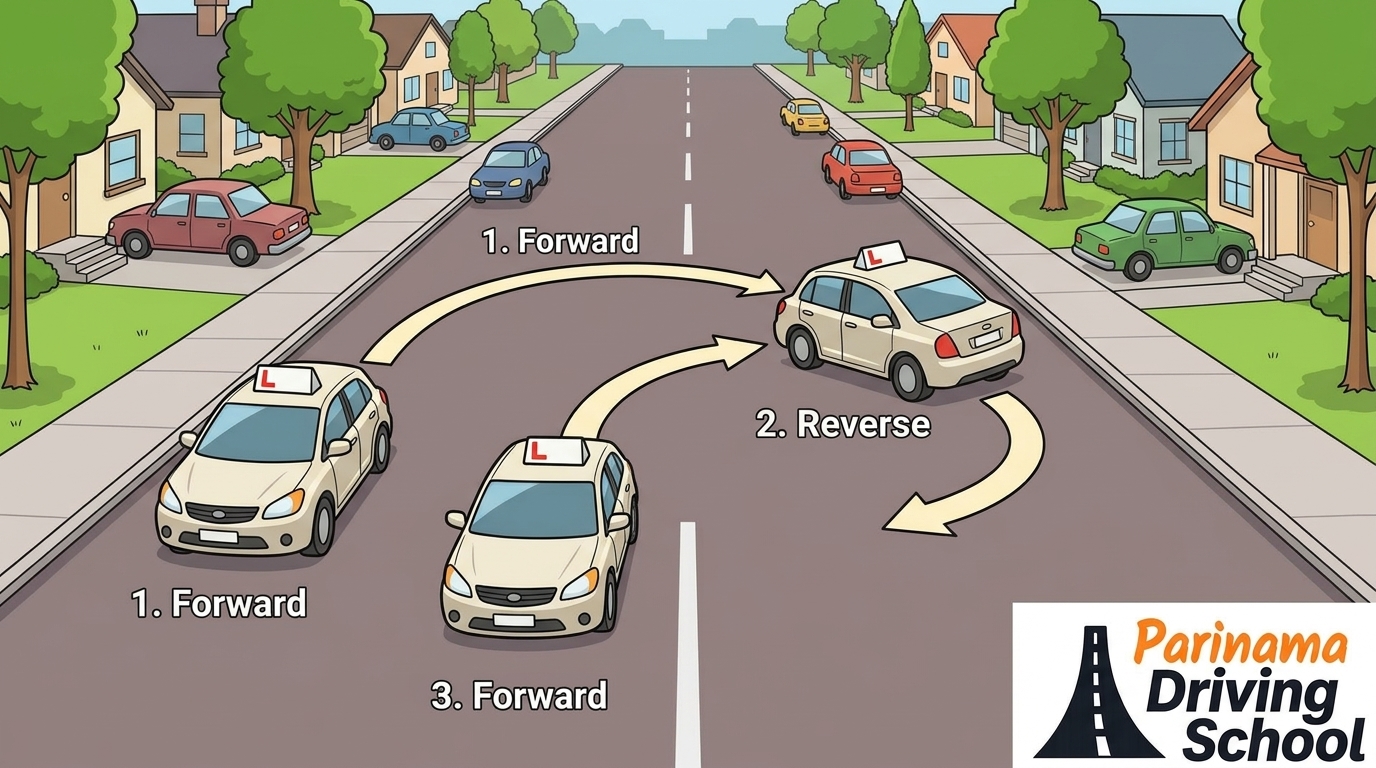
A three point turn, also known as a Y-turn or K-turn, allows you to turn your vehicle around in a confined space. It involves making a left turn, backing up, and making another left turn to complete the maneuver. According to the National Safety Council (NSC), this technique is essential for narrow streets where a U-turn is not feasible.
When to Use a Three Point Turn
Use a three point turn when:
- The road is too narrow for a U-turn.
- You need to change direction quickly in a confined space.
- You are instructed to perform it during a driving test, as it is commonly assessed by DMV examiners.
Step-by-Step Instructions
Follow these steps to perform a three point turn successfully:
- Find a Safe Spot: Identify a clear, wide area with good visibility free from obstacles or pedestrians.
- Check for Traffic: Look around for oncoming vehicles by checking your mirrors and surrounding area before starting the maneuver.
- Turn Left: Signal left and steer your vehicle almost to the curb, stopping near the edge of the road.
- Shift to Reverse: Put the car in reverse, ensuring the road is clear behind you.
- Back Up and Turn Right: While reversing, turn your steering wheel to the right, angling your vehicle toward the opposite curb.
- Shift to Drive: Once enough space appears, shift back to drive.
- Complete the Turn: Finally, turn left again to guide your vehicle into the new direction.
Table: Three Point Turn Maneuver Summary
| Step | Action | Key Tip |
|---|---|---|
| 1. Find a Spot | Identify a wide, clear area for the turn | Ensure visibility and safety |
| 2. Check Traffic | Look for vehicles or pedestrians | Prioritize safety |
| 3. Turn Left | Signal and turn almost to the curb | Prepare for reversing |
| 4. Shift to Reverse | Ensure safe backing up | Look around and check mirrors |
| 5. Back Up | Steer right while reversing | Angle towards the opposite curb |
| 6. Shift to Drive | Put the vehicle in drive once space is clear | Ensure the road ahead is obstacle-free |
| 7. Complete the Turn | Steer left into the new lane | Finalize the maneuver safely |
Common Mistakes to Avoid
- Not checking for traffic before starting the maneuver.
- Moving too fast, compromising control and visibility.
- Neglecting to signal, which can confuse other drivers.
Safety Tips for a Three Point Turn
- Always perform the maneuver in an area with minimal traffic.
- Use your mirrors and check blind spots diligently.
- Avoid performing a three point turn on busy roads or intersections.
Potential Risks of a Three Point Turn
While a three point turn is commonly used, be aware of the following risks:
- Legal Restrictions: Some areas may have restrictions regarding where you can make such turns. Familiarize yourself with local driving laws which can differ by state; consult your local Department of Motor Vehicles (DMV) for guidance.
- Limited Visibility: Conducting a three point turn where visibility is poor can result in accidents. Always choose a well-lit area.
- Traffic Conditions: Performing this maneuver in a busy urban environment increases risks; you might receive unexpected driver reactions.
Practical Example of a Three Point Turn
Consider a scenario on a residential street where a driver must turn their vehicle around due to a dead end. The driver assessed their surroundings, ensuring no pedestrians are present and only a few parked cars are in view. By following the steps outlined, they execute a three point turn safely and confidently.
Checklist
- Choose a wide, clear space for the maneuver.
- Check for surrounding traffic before starting.
- Use your turn signals.
- Be aware of the local laws regarding three point turns.
Summary
A three point turn is a vital driving skill for navigating tight spaces. By following the step-by-step instructions and prioritizing safety, you can perform this maneuver efficiently. Be mindful of local laws and potential risks when executing a three point turn.
Call to Action
Ready to master your driving skills? Consult your local driving laws and practice your three point turn today to enhance your maneuvering abilities on the road.
Frequently asked questions
- What is a three point turn?
- A three point turn is a driving maneuver to turn a vehicle around in a narrow space using three distinct movements: forward, backward, and then forward again.
- Is a three point turn the same as a U-turn?
- No, a three point turn is different from a U-turn. A U-turn allows for a 180° turn in one continuous motion, while a three point turn involves a series of moves.
- When should I avoid a three point turn?
- Avoid a three point turn in high-traffic areas and conditions where visibility is limited, or local laws prohibit it.
Written by
Parinama Driving School Team
Parinama Driving School is a Texas DPS–authorized driving school in Austin & San Antonio, helping adults, teens, and new residents get licensed with behind-the-wheel lessons and third-party road tests, 7 days a week.
Book a lesson with our instructorsRelated Texas driving guides
Cost of Getting a Driver's License in Texas 2026: A Complete Guide
Discover the cost of getting a driver's license in Texas in 2026. Learn about fees, requirements, and how Parinama Driving School can guide you through the process.
How to Merge on I-10 in San Antonio: Essential Tips
Navigating I-10 in San Antonio can be challenging, especially when merging. This guide provides step-by-step instructions to ensure safe and confident merging.
Essential First Time Driving Alone Tips for New Drivers
Embarking on your first solo drive can be both exciting and nerve-wracking. Our essential tips will help you navigate this milestone safely and confidently.